

How we threw an Apricot-themed Spring dinner party for 2
Creating a menu and tablescape to showcase our Spring 2026 color


Yikes! We’re a bit behind in our publishing schedule, but the warm weather and longer days are a useful reminder to share our spring food and tablescape edition with you ASAP.
Enjoy, and stay tuned for our summer edition coming very soon.
Our Apricot-themed spring dinner was our chance to test drive our new food and tablescapes concept, and also our first attempt at a bigger creative project with a baby in the house. With so many new things happening, one of our top requirements was to make the event as easy for ourselves as possible.
That meant:
Keeping it small - dinner for 2, no guests necessary
Nothing unnecessarily complicated or intimidating to cook or prepare
As much preparation the day before as possible
Of course, no plan survives impact with reality, and things did go wrong. But that’s ok.
I honestly consider these challenges to be all part of the fun, and I love figuring out creative solutions, with occasional help from Google and AI. But by minimizing the number of variables in this first iteration, we kept the size of any potential problems in check, got Round 1 under our belts and significantly increased our enjoyment of the process.
Here were our other considerations for the Spring Apricot shoot:
Apricot is a spring color, but the actual apricot fruit it’s named after is ripest in the summer, with peak season in July and August. Since there was no way we were going to use fresh apricots if they weren’t absolutely perfect - that would be sad - we relied on preserved forms of apricot (dried fruit, jam and tea) instead.
Apricot is not the only food that is apricot in color. As you’ll see in the menu, we were able to use roasted carrots, Israeli couscous (also called ptitim or pearl couscous) and chicken to provide various apricot shades.
In order to lift apricot’s very warm color palette and provide balance, we leaned heavily on different shades of green as a supporting element, with our recipes incorporating asparagus (a very spring-y vegetable!), pistachios and za’atar.
Spring is Passover season, so we wanted at least one of our dishes to be Kosher for Passover, which our gluten-free almond flour cake most certainly is.
Here is our final menu:
Starter: Roasted Carrot & Ginger Soup with Za’atar Oil
Main: Harissa Roasted Chicken Thighs with Apricot Glaze
Side: Israeli Couscous with Asparagus
Dessert: Almond & Apricot Cake with Crushed Pistachios
Drinks: Apricot Tea / Mead / Water
Once the menu was finalized, it was my job to get it cooked and looking good for the camera. All the different courses had to be ready at approximately the same time, so that Anna-Lena could photograph the finished tablescape and we could eat before the food got cold.
As I mentioned, things never go quite according to plan, and the real skill is in rolling with the punches and improvising. Here are my notes on how that went:
Our plan was to do the shoot on a Sunday, which would allow me to bake the cake, marinate the chicken and make the roasted carrot soup at a leisurely pace on Saturday. However, we realized that it would actually be kind of nice to get everything done on Saturday, as that would give us all of Sunday to rest and recover before going back to work on Monday. The new schedule did make Sunday less stressful, but it also meant that I had to prepare all the planned day-ahead elements in the late Saturday morning / early Saturday afternoon, and then start cooking in earnest after we’d put the baby to sleep around 7:30pm, making for a very late shoot.
I did not start a timer when I put the cake in the oven, partly because my mind was elsewhere (new parents can sympathize), but also because I like to “let the food tell me” (via visual cues, smell, etc) what needs to be done. I like to think about how previous generations successfully cooked without all the gadgets we have today, and I also find it liberating to rely on my own senses.
However:
I learned that almond-flour cakes are tricky to gauge visually - the top can brown quickly and appear finished while the inside of the cake is still raw. What saved me was another old-school technique, the skewer test i.e. inserting a toothpick in the middle and seeing if there is wet batter on it (which means it needs more time) or only a few crumbs (which means it’s done). Worked like a charm.The recipe called for heating za’atar oil in a small pot on the stove, but time and pots were in short supply, so I ended up mixing the olive oil and za’atar in a bowl and doing 10s bursts in the microwave. It worked perfectly.
(Note: I think we overlook microwaves as a serious and acceptable tool for cooking, likely because we associate them with frozen microwave dinners and reheating leftovers. But microwaves are fantastic tools for making fancy things in small quantities, including toasted nuts, fried capers and even caramel sauce - check out this video from America’s Test Kitchen to learn more.)I was initially planning on roasting the chicken legs in a ceramic roasting dish, but then realized that this would limit airflow and prevent the chicken from getting crispy. The solution was to put the chicken on a wire rack on top of a baking sheet, which really helped the skin crisp up deliciously, while the baking sheet caught the meat juices and glaze, which I then added into the Israeli couscous for additional flavor.
The mead (honey wine/beer) that we chose, mostly for its color, was far too sweet for our liking and didn’t fit the menu at all. Great in the pictures, but we do not recommend it to actually accompany the meal.
We finally got everything on the table late in the evening, and once Anna-Lena was done taking the pictures, we dug in.
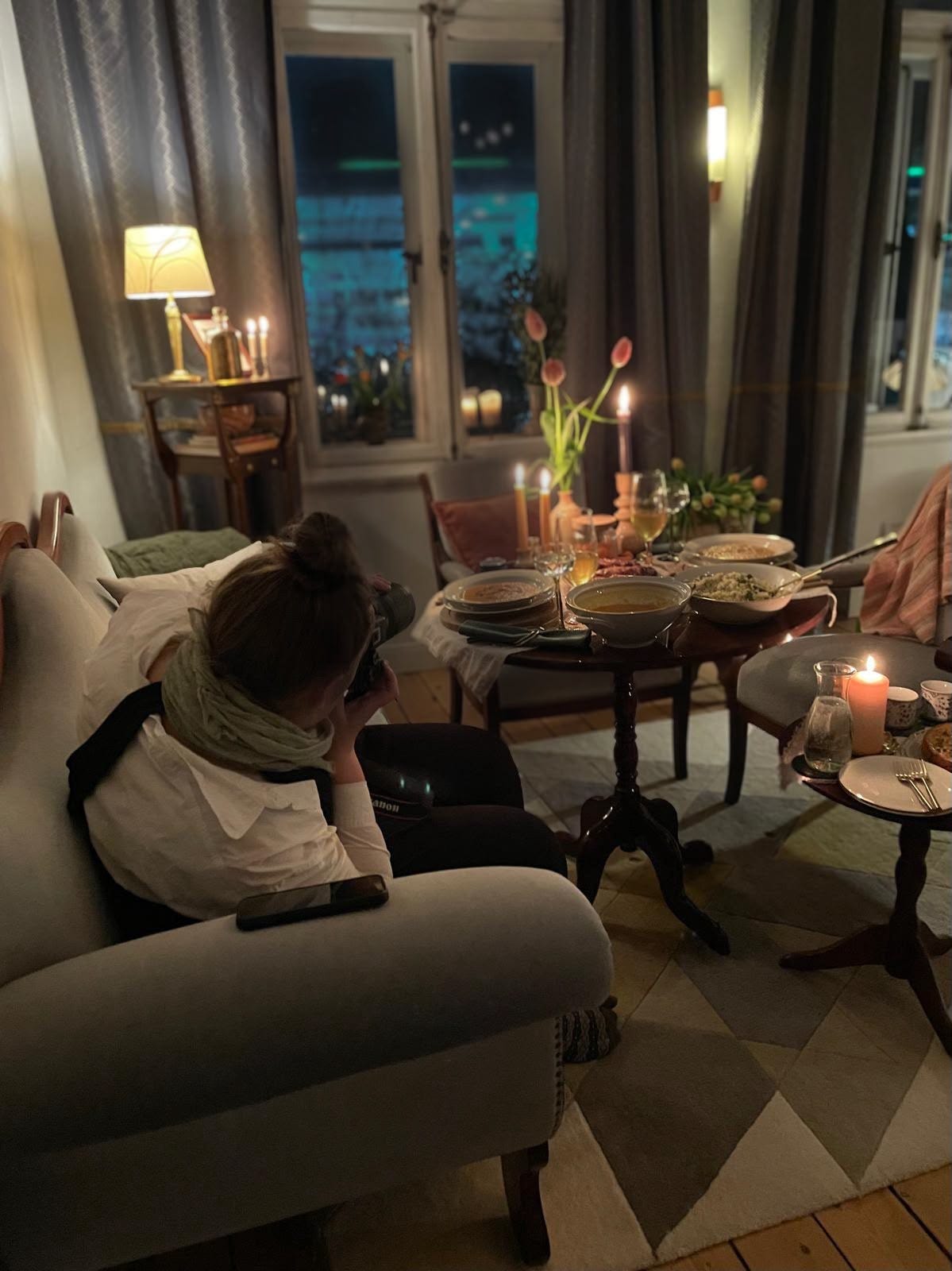
The food was delicious, and it was incredibly satisfying to see everything come together so well. We both had an absolute blast, and we agreed that this is something that we want to keep doing every season.
All the recipes are listed below - hope you enjoy, and let us know if you try out any of them!
- David & Anna-Lena
ROASTED CARROT & GINGER SOUP WITH ZA’ATAR OIL
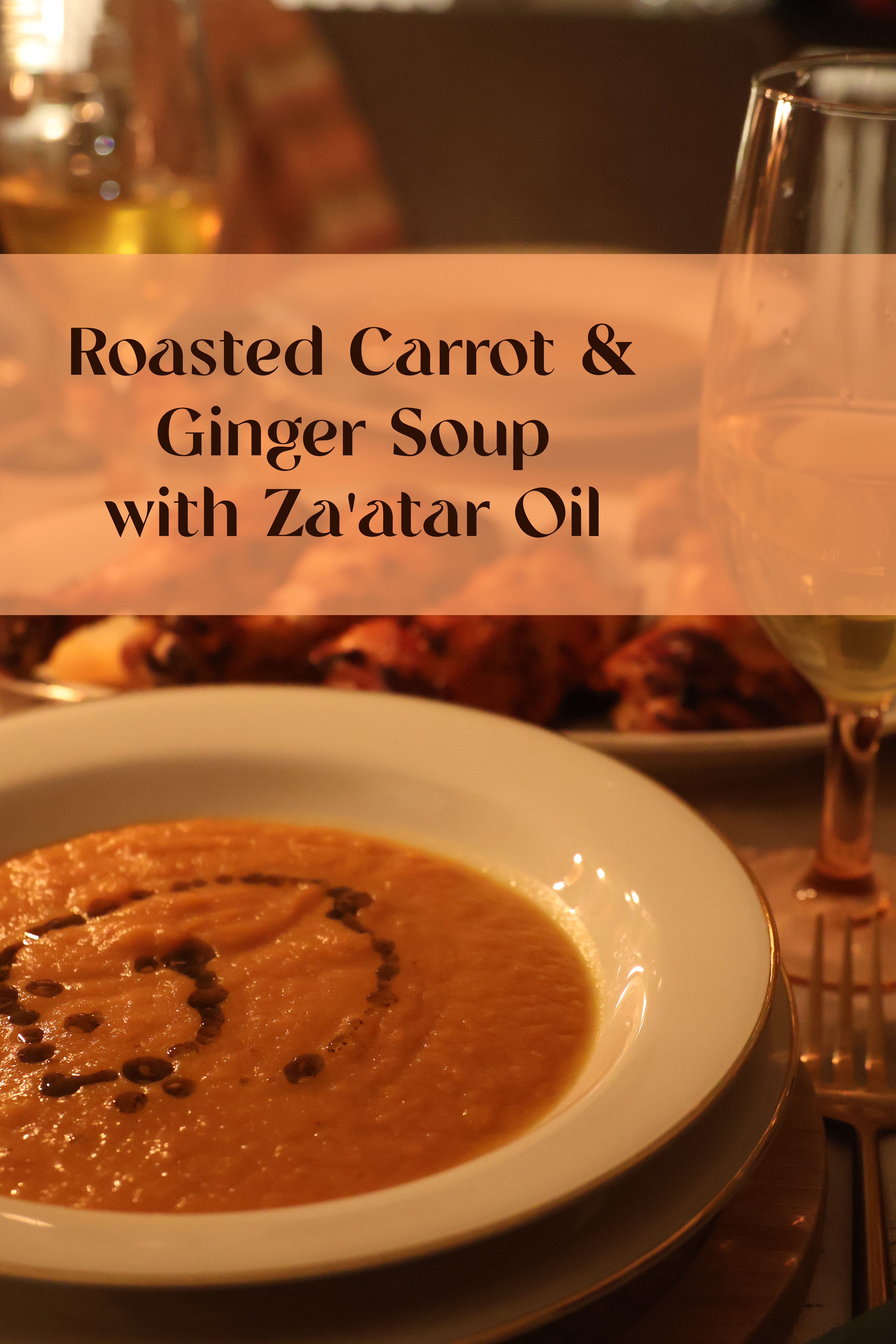
Serves 2
Ingredients
For the soup
500g carrots, peeled and cut into chunks
1 medium onion, roughly chopped
3 garlic cloves, unpeeled
1 thumb-sized piece of fresh ginger, peeled and roughly sliced
2 tbsp olive oil
Salt and black pepper
700ml vegetable stock
½ tsp ground cumin
½ tsp ground coriander
Squeeze of lemon juice to finish
For the za’atar oil
3 tbsp good olive oil
1½ tsp za’atar
Method
Preheat your oven to 200°C. Toss the carrots, onion, and unpeeled garlic in olive oil, season well, and roast for 30–35 minutes until soft and catching color at the edges. The caramelization is important, as it deepens both the flavor and the color.
Squeeze the garlic out of its skins. Transfer everything to a saucepan with the ginger, cumin, coriander, and stock. Simmer for 10 minutes.
Blend until completely smooth. Add a squeeze of lemon, taste, and adjust seasoning. If it feels too thick, loosen with a little water or stock; you want it to pool beautifully in the bowl, not sit like a mound.
For the za’atar oil, warm the olive oil gently in a small pan, add the za’atar, stir, and remove from heat.
Alternatively, you can mix the olive oil and za’atar in a bowl and heat in the microwave in 10s bursts.
You just want to bloom the spices into the oil, not fry them.
To serve Ladle into wide shallow bowls. Swirl the za’atar oil on top with a spoon and drag it in a slow spiral from the center outward. A few extra za’atar flakes scattered on top finish it nicely.
Make-ahead note The soup keeps in the refrigerator for 3 days and freezes well. Make the za’atar oil fresh on the day of serving.
HARISSA ROASTED CHICKEN THIGHS WITH APRICOT GLAZE
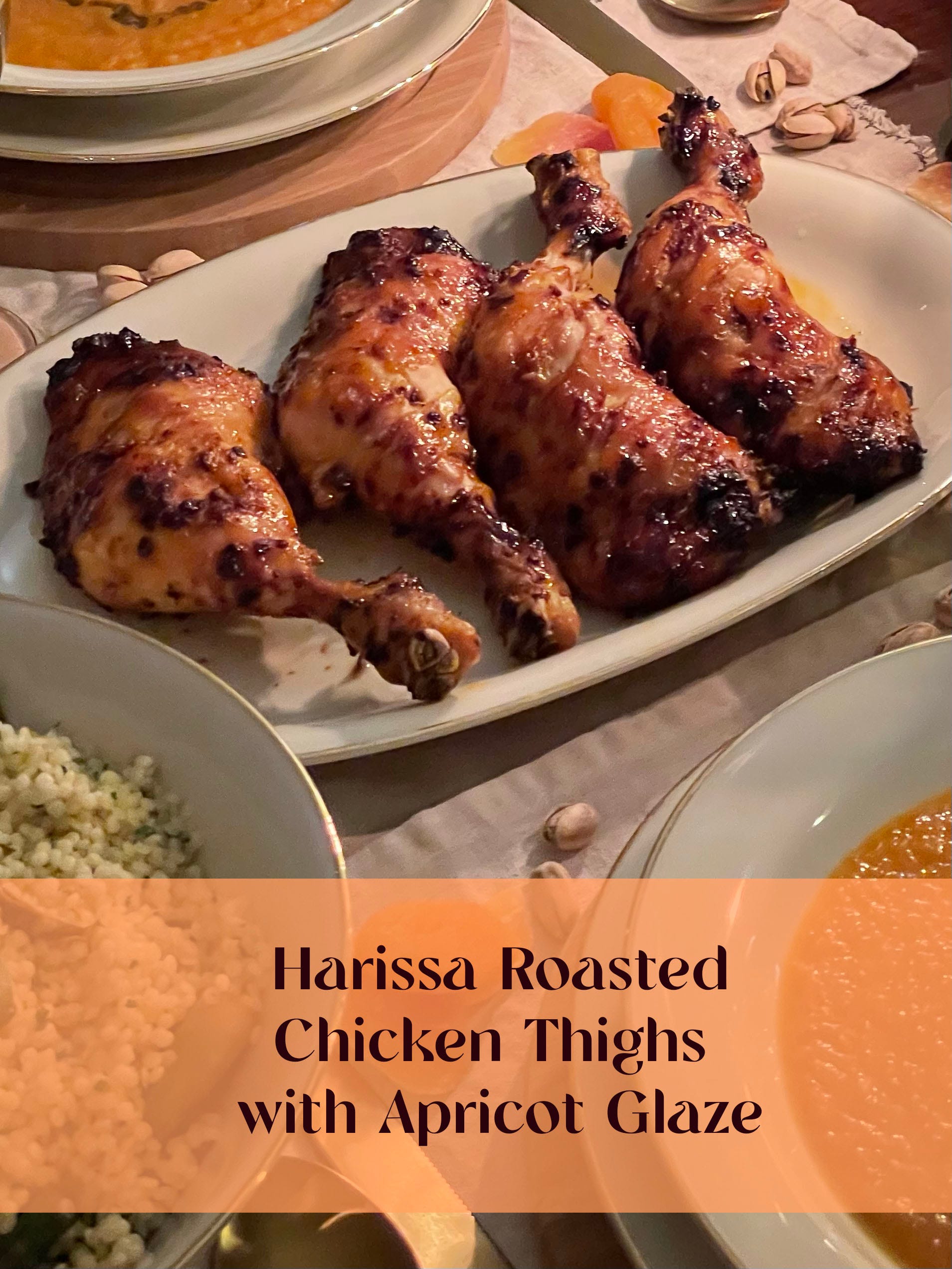
Serves 2
Ingredients
For the chicken
4 bone-in, skin-on chicken thighs
2 tbsp harissa
2 tbsp olive oil
3 garlic cloves, minced
1 tsp ground cumin
1 tsp smoked paprika
Salt and black pepper
For the apricot glaze
4 tbsp apricot jam
1 tbsp honey
1 tbsp apple cider vinegar
Pinch of chili flakes
Method
Mix the harissa, olive oil, garlic, cumin, paprika, and seasoning into a paste. Score the chicken thighs a few times with a knife and rub the marinade all over, getting under the skin. Leave to marinate for at least 1 hour, ideally overnight in the refrigerator.
Preheat oven to 200°C. Place chicken skin-side up on a foil-lined baking sheet fitted with a wire rack and roast for 25 minutes.
Meanwhile, warm the apricot jam, honey, vinegar, and chili flakes in a small saucepan until loose and combined.
After 25 minutes, spoon the glaze generously over the chicken and return to the oven for a further 15–20 minutes until the skin is deeply lacquered and caramelized. Keep an eye on it, as the sugars can catch. You want deep amber, not burnt.
Rest for 5 minutes before serving.
Make-ahead note Marinate the night before. This genuinely improves the depth of flavor and removes stress on the day of. The glaze can also be made ahead and reheated.
Additional note We were planning on making this again, but our apricot jam had gone moldy. So I substituted grape jelly, which tasted fantastic. I don’t think other fruit jams e.g. strawberry, raspberry would work as well.
ISRAELI COUSCOUS WITH ASPARAGUS
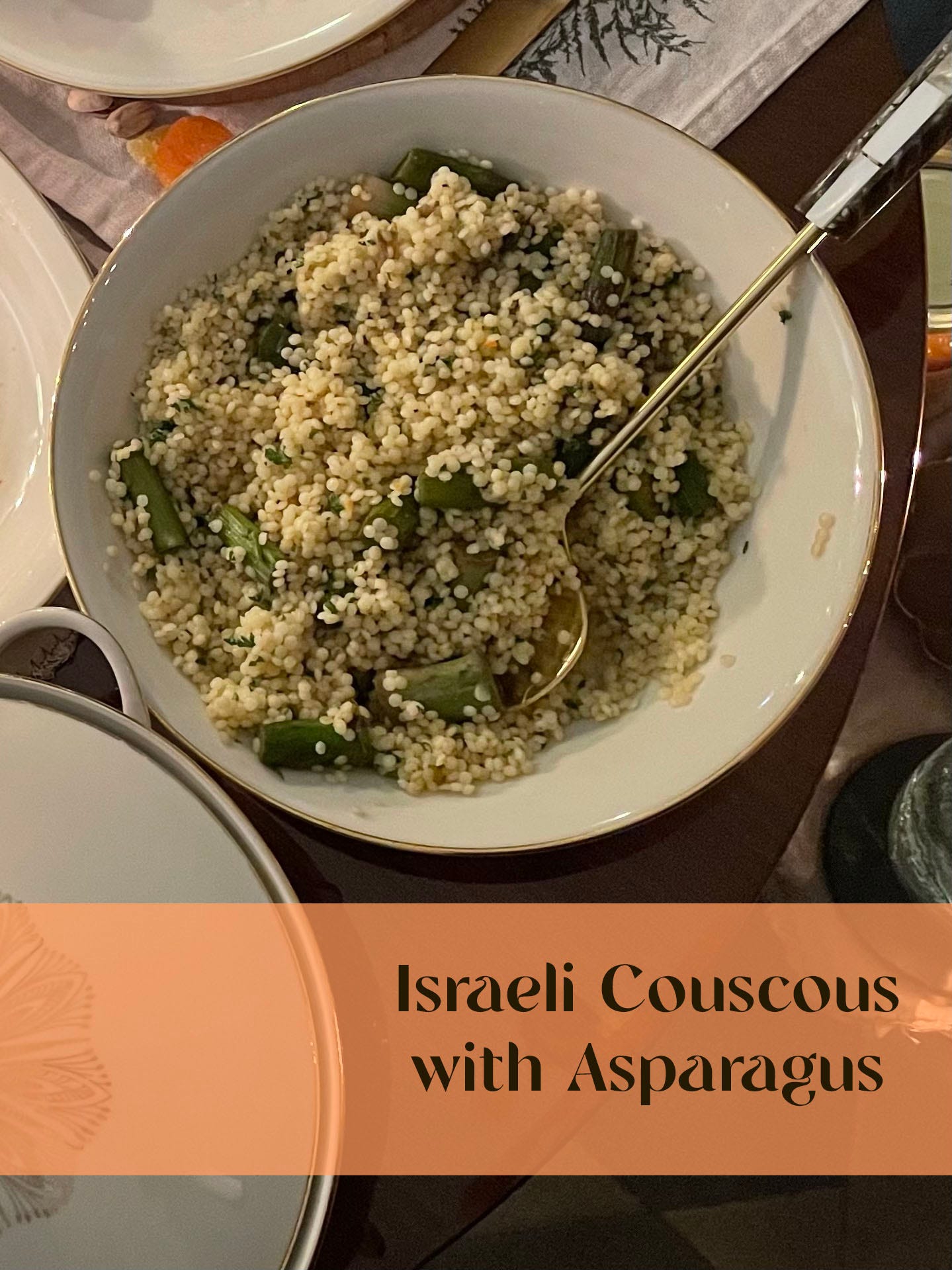
Serves 2
Ingredients
200g Israeli couscous (also called ptitim or pearl couscous)
1 bunch asparagus, woody ends snapped off, cut into 1-inch pieces
2 tbsp olive oil
2 garlic cloves, finely sliced
500ml vegetable stock
Zest of 1 lemon
Small handful of fresh flat-leaf parsley, roughly chopped
Salt and black pepper
Optional: a few toasted pine nuts for texture
Method
Heat 1 tbsp olive oil in a medium saucepan over medium heat. Add the couscous and toast for 2–3 minutes, stirring regularly, until it turns a light golden color. This step adds nuttiness and stops the couscous from going mushy.
Pour in the stock, bring to a simmer, cover, and cook for 8–10 minutes until the liquid is absorbed and the couscous is tender. Remove from heat and let it sit covered for 2 minutes.
Meanwhile, heat the remaining olive oil in a skillet over medium-high heat. Add the garlic and asparagus and sauté for 3–4 minutes until the asparagus is just tender but still has a little bite and color. Season well.
Fold the asparagus and garlic through the couscous along with the lemon zest and parsley. Taste and adjust seasoning.
Make-ahead note The couscous can be cooked ahead and reheated gently with a splash of water or stock to loosen. Cook the asparagus fresh on the day, as it loses its color quickly if it sits too long.
ALMOND & APRICOT CAKE WITH CRUSHED PISTACHIOS
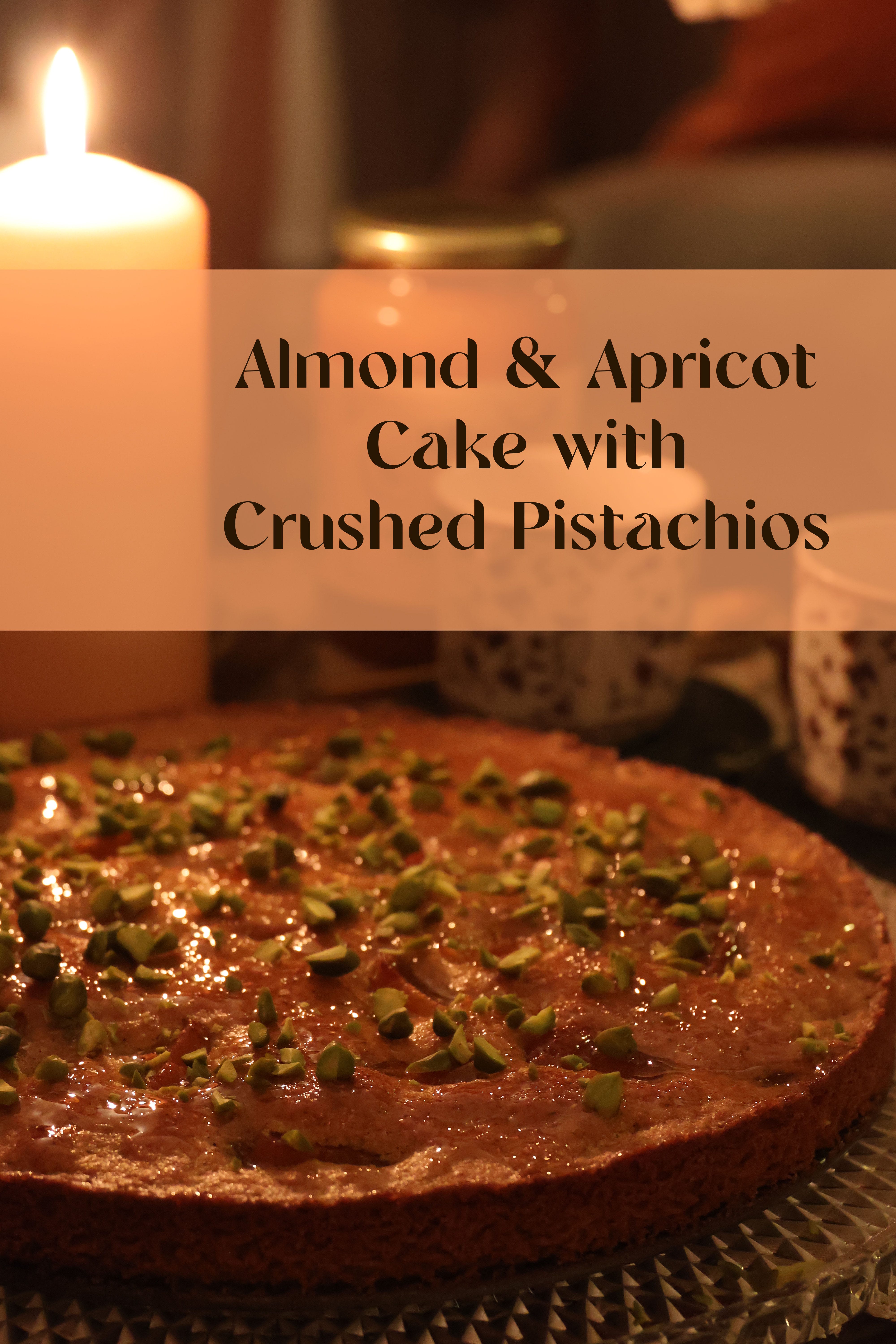
Serves 6–8
Ingredients
For the cake
200g ground almonds
150g dried apricots, roughly chopped (plus a few extra halved, to press on top before baking)
150g superfine sugar
3 large eggs
120ml light olive oil or neutral oil
Zest of 1 orange
1 tsp vanilla extract
1 tsp baking powder
Pinch of salt
To finish
2 tbsp honey, warmed
40g pistachios, roughly crushed
Method
Preheat oven to 170°C. Grease and line a 20cm round cake pan.
Whisk the eggs and sugar together until pale and slightly thickened, about 2 minutes.
Add the oil, orange zest, and vanilla and whisk to combine.
Fold in the ground almonds, baking powder, and salt until just combined. Fold in the chopped dried apricots.
Pour into the prepared pan. Press the reserved apricot halves gently into the top in a loose pattern — these will caramelise beautifully as the cake bakes.
Bake for 35–40 minutes until golden and a skewer comes out clean. If it’s browning too fast, cover loosely with foil after 25 minutes.
Leave to cool in the pan for 10 minutes, then turn out onto a wire rack.
Once cool, brush the top with warmed honey, then scatter the crushed pistachios generously over the top.
Make-ahead note Like many almond flour cakes (I have a great chocolate one that I will share at some point), this cake is better the next day, as the almond and apricot flavors deepen overnight. Bake it ahead, wrap well, and add the honey glaze and pistachios on the morning of serving.